South Korea is a welcoming and exciting country to visit, especially for first-time travelers. From modern cities and historic palaces to beautiful cafes, street food markets, and efficient public transportation, Korea is full of memorable experiences.
However, every country has its own social customs, and Korea is no exception. Most locals understand that visitors may not know every rule, but being aware of a few common mistakes can help you travel more respectfully and comfortably.
This guide is not about being perfect. It is about understanding small habits that matter in everyday Korean life. Here are 15 mistakes first-time visitors should avoid in Korea.
1. Speaking Too Loudly on Public Transportation
Korea’s subway and bus systems are usually clean, organized, and quiet. Many people use public transportation to rest, read, listen to music with earphones, or simply sit quietly after a long day.
One common mistake visitors make is speaking too loudly on the subway or bus. Loud group conversations, speakerphone calls, or videos played without headphones can stand out quickly.
You do not need to be completely silent, but it is best to keep your voice low. If you need to take a phone call, keep it short and quiet.
This is especially important during rush hour in Seoul, Busan, and other major cities.
2. Sitting in Priority Seats When You Do Not Need Them
Subways and buses in Korea have priority seats for elderly passengers, pregnant women, people with disabilities, and passengers who need extra care.
Even when these seats are empty, many locals avoid sitting there unless they truly need them. Tourists should try to do the same.
You may also see pink seats or special marked areas for pregnant passengers. These seats should be kept available, even if the train looks quiet.
If you are unsure whether a seat is a priority seat, look for signs or symbols near the seat.
3. Blocking Subway Doors or Walkways
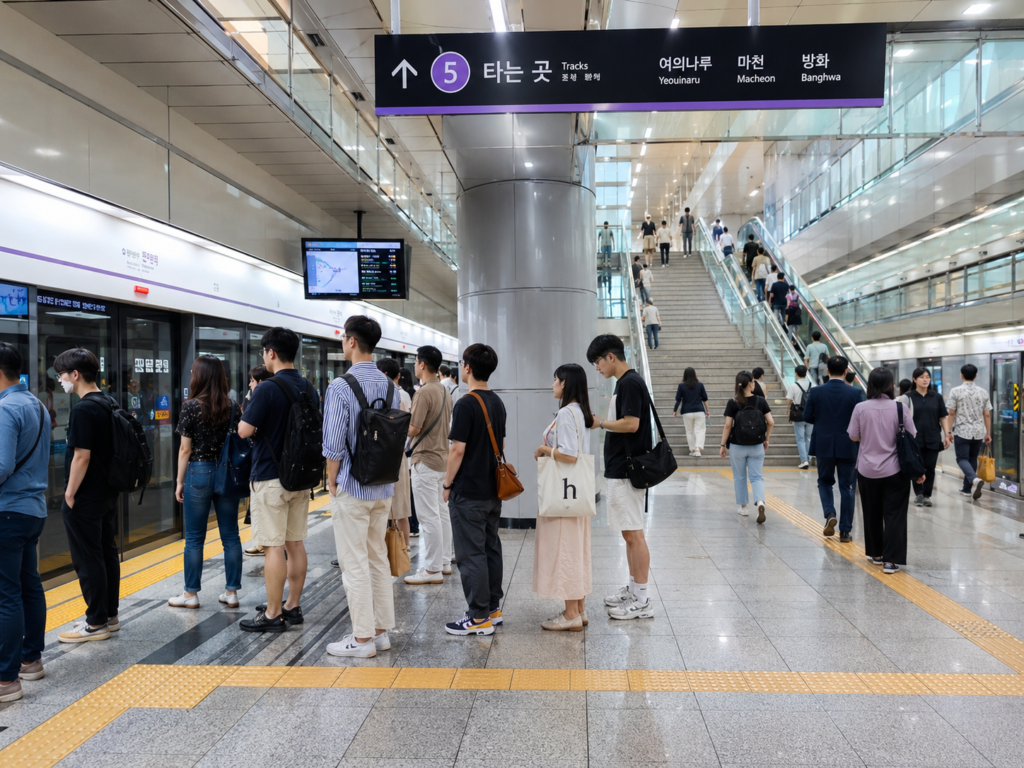
Korean subway stations can be very busy, especially in places like Seoul Station, Gangnam, Hongdae, Myeongdong, Jamsil, and airport terminals.
A common mistake is stopping suddenly in the middle of a walkway, staircase, escalator entrance, or subway door area to check directions or take photos.
If you need to look at your phone, check a map, or take a picture, move to the side first. This small habit makes a big difference in crowded places.
When waiting for the subway, stand to the side of the doors and let passengers exit before you enter.
4. Ignoring Lines
Korea has a strong queuing culture. People line up for buses, subway doors, restaurants, cafes, restrooms, ticket counters, and popular attractions.
At subway platforms, you will often see lines marked on the floor. At bus stops, people may form a line in the order they arrived.
Cutting in line, even by accident, can seem rude. If you are confused about where the line starts, take a moment to observe how people are waiting.
For popular restaurants or cafes, there may also be a tablet, kiosk, or waiting list near the entrance. Do not assume you can simply walk in and sit down.
5. Eating Strong-Smelling Food on Public Transportation
Korean street food is one of the best parts of visiting Korea, but public transportation is not the best place to eat it.
Avoid eating full meals or strong-smelling food on the subway or bus. Foods like tteokbokki, fried snacks, grilled skewers, or hot soup dishes are better enjoyed at the market, food stall, or nearby seating area.
Drinks with lids are usually fine, but be careful not to spill anything.
Public transportation is shared space, so keeping it clean and comfortable is considered polite.
6. Leaving Trash at Tables or in Public Spaces
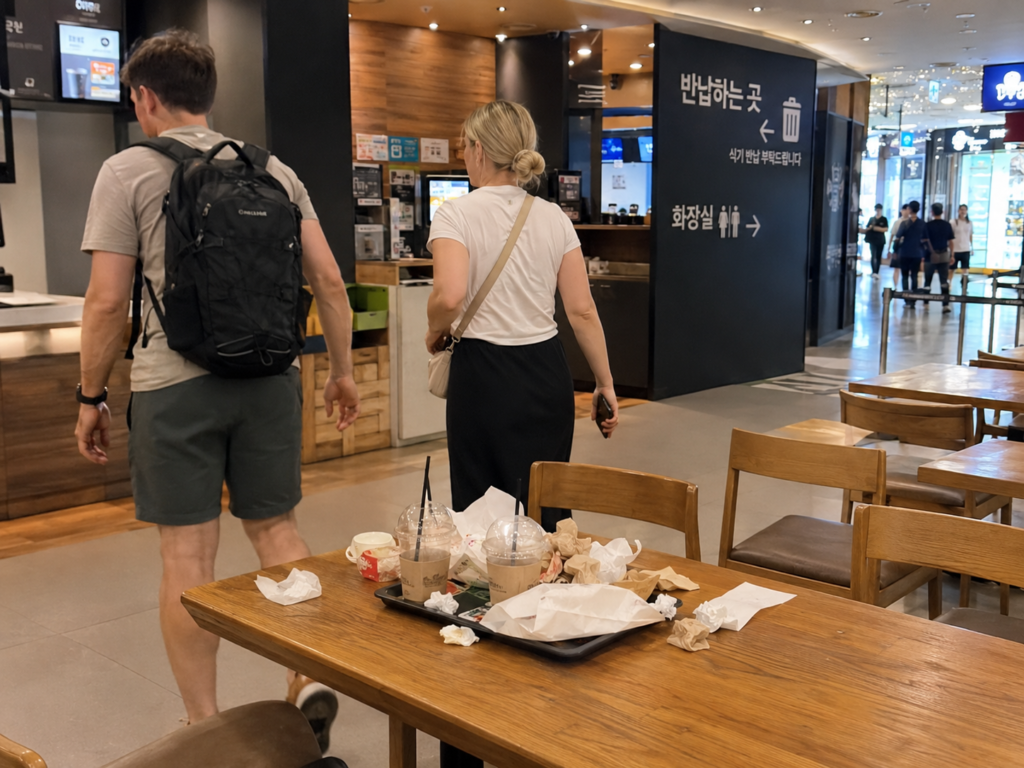
Visitors are often surprised that public trash cans can be hard to find in Korea. However, leaving trash behind in public places is still considered bad manners.
Do not leave cups, wrappers, tissues, or food containers on benches, subway platforms, sidewalks, or market tables unless there is a clear trash area.
In some cafes, you may need to return your tray and separate trash yourself. In food courts, there is often a return area for trays and dishes.
A useful habit is to carry a small plastic bag in your backpack or purse until you find a proper trash bin.
7. Wearing Shoes Inside Certain Places
In Korea, shoes are usually removed before entering homes. Some traditional guesthouses, hanok stays, temples, restaurants, and cultural spaces may also require visitors to take off their shoes.
Look near the entrance. If you see shoe racks, slippers, or other people removing their shoes, follow their lead.
This can also happen in some traditional restaurants where guests sit on floor seating.
Wearing clean socks is a good idea when traveling in Korea, especially if you plan to visit traditional places.
8. Sticking Chopsticks Upright in Rice
One important dining mistake to avoid is sticking chopsticks upright into a bowl of rice.
In Korea and in several other East Asian cultures, this can remind people of funeral or memorial rituals. Because of that, it can feel inappropriate at the dining table.
When you are not using your chopsticks, place them neatly on the table, on a chopstick rest if one is provided, or across your bowl.
You do not need to know every detail of Korean dining etiquette, but this is one rule worth remembering.
9. Starting to Eat Before Older People at the Table
Korean dining culture often reflects respect for age and social order. If you are eating with Korean friends, hosts, coworkers, or older people, it is polite to wait until the oldest person starts eating first.
This does not mean tourists need to feel nervous at every meal. If you are eating alone or with other travelers, this rule is not important.
But if you are invited to a meal with Korean people, waiting for a moment before you begin is a simple way to show respect.
Small gestures like this are often noticed and appreciated.
10. Pouring Only Your Own Drink in a Group Setting
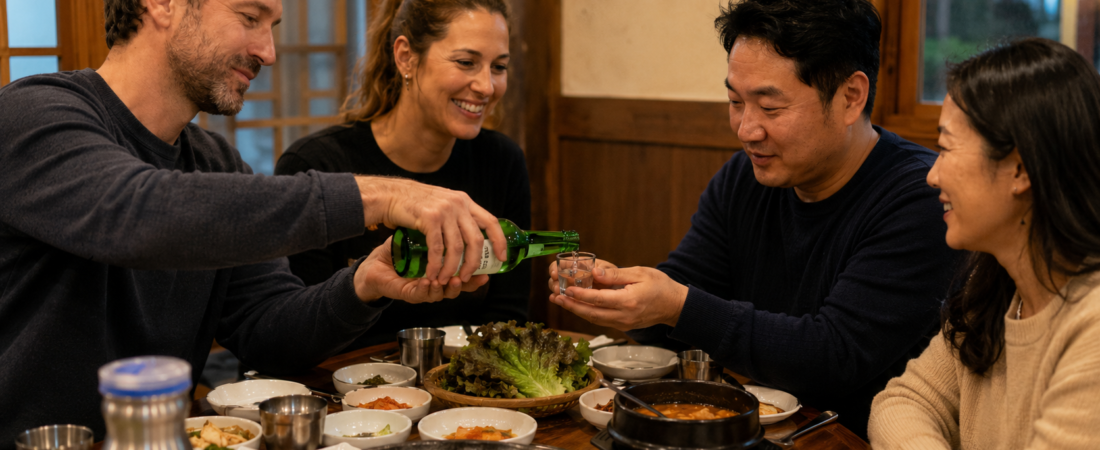
When drinking with others in Korea, people often pour drinks for each other instead of only pouring their own.
If someone pours a drink for you, it is polite to hold your glass with both hands, especially if the person is older or if the setting is more formal.
You can also offer to pour for others. This small gesture can make the meal feel more friendly and respectful.
In a casual restaurant with close friends, the atmosphere may be relaxed. Still, knowing this custom can help you feel more comfortable in group dining situations.
11. Taking Photos of Strangers Too Closely
Korea has many beautiful places to photograph, including markets, cafes, palaces, subway stations, shopping streets, and traditional villages.
However, avoid taking close-up photos of strangers without permission. This is especially important in small shops, restaurants, temples, markets, and residential neighborhoods.
Wide street photos are usually less sensitive, but you should still be careful not to make people feel uncomfortable.
If a person is clearly the main subject of your photo, ask first or choose a different angle.
12. Taking Photos Where Photography Is Not Allowed
Some places in Korea may restrict photography. This can include museums, exhibitions, galleries, temples, private shops, certain restaurants, and security-sensitive areas.
Before taking photos, look for signs. If you are unsure, ask politely or put your camera away.
This is especially important in quiet cultural spaces, memorial sites, and religious places. Even if other tourists are taking photos, it is better to follow the posted rules.
A respectful visitor knows when to enjoy a place without taking pictures.
13. Using Too-Casual Language Without Understanding Korean Politeness
Many visitors learn a few Korean words before traveling, which is a great idea. However, Korean has different levels of politeness, and some casual expressions may sound too informal when used with strangers, older people, or service workers.
For example, friendly Korean phrases from dramas, social media, or K-pop content may not always be appropriate in everyday situations.
When in doubt, use polite basic expressions such as:
Annyeonghaseyo for hello
Gamsahamnida for thank you
Joesonghamnida for sorry or excuse me
You do not need perfect Korean. A polite tone and respectful attitude matter more than perfect pronunciation.
14. Ignoring Restaurant, Cafe, or Waiting Rules
Korean restaurants and cafes often have their own systems, especially in busy areas.
Some cafes require one drink per person. Some restaurants have a minimum order. Popular restaurants may use a waiting list, tablet, kiosk, or phone number system. In food courts or casual restaurants, you may need to order first, pick up your food when your number is called, and return your tray afterward.
Do not assume every place works the same way.
Before sitting down, check whether there is a host, a kiosk, a waiting machine, or a sign near the entrance. If you are not sure, watch what other customers are doing or ask the staff politely.
This is especially helpful in busy neighborhoods like Seongsu, Hongdae, Myeongdong, Ikseon-dong, Gangnam, and popular food markets.
15. Treating Local Neighborhoods Like Tourist Sets
Some of Korea’s most beautiful areas are also real neighborhoods where people live, work, and go about their daily lives.
Places like Bukchon Hanok Village, Seochon, Ikseon-dong, Jeonju Hanok Village, and quiet cafe streets can be very popular with visitors. But not every alley, doorway, or courtyard is a tourist attraction.
Avoid shouting, blocking narrow alleys, entering private property, posing in front of people’s homes too closely, or taking intrusive photos.
A place can be beautiful and still deserve privacy. Respecting local neighborhoods helps preserve the experience for both residents and future visitors.
Final Thoughts
You do not need to know every Korean custom before your trip. Most locals understand that tourists may make small mistakes, especially if it is their first time in Korea.
What matters most is being polite, observant, and respectful. Speak quietly in shared spaces, wait in line, keep public areas clean, follow basic dining manners, respect photography rules, and pay attention to local customs.
Korea is a wonderful country to explore, and learning what not to do can make your trip smoother and more enjoyable.
Whether you are riding the subway in Seoul, visiting a traditional village, eating at a local restaurant, shopping in a market, or relaxing in a cafe, small acts of respect can help you experience Korea in a more thoughtful and meaningful way.