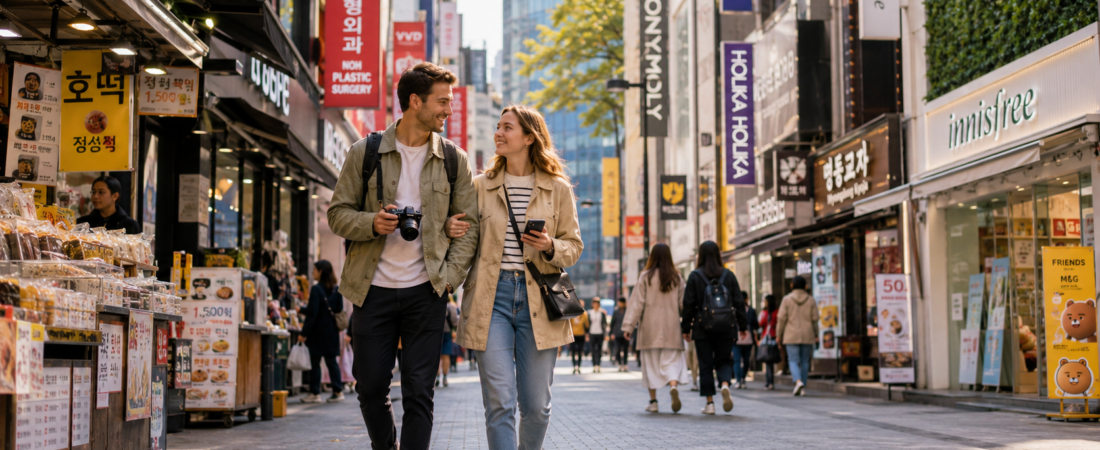
Planning your first trip to Korea can feel exciting, overwhelming, and a little confusing at the same time. South Korea is modern, fast-moving, safe, and full of incredible food, history, shopping, cafes, and cultural experiences. But if you are visiting for the first time, there are a few things that can make your trip much easier.
From transportation cards to local etiquette, here are 15 essential Korea travel tips every first-time visitor should know before arriving.
1. Get a T-money Card When You Arrive
A T-money card is one of the first things you should get in Korea. It is a rechargeable transportation card that you can use for subways, buses, convenience stores, and some taxis.
You can usually buy a T-money card at convenience stores such as CU, GS25, 7-Eleven, or at subway stations. After buying the card, you can recharge it with cash at subway ticket machines or convenience stores.
Using a T-money card is much easier than buying a single-use subway ticket every time you travel.
For official information about T-money cards, including where they can be used and how they work, you can visit the official T-money website.
2. Use Public Transportation Whenever Possible
Korea has an excellent public transportation system, especially in major cities like Seoul, Busan, Daegu, Daejeon, and Incheon.
The subway is clean, efficient, and easy to use once you understand the basic system. Buses are also convenient, but they may be a little harder for first-time visitors because routes and stops can be confusing.
If this is your first visit, start with the subway. It is usually the easiest way to move around the city.
Before using the subway, it is helpful to check the official Seoul subway map and route information.
3. Download Helpful Korea Travel Apps
Some global apps may not work as well in Korea as they do in other countries. For example, Google Maps may not always provide the best walking or driving directions in Korea.
Useful apps for Korea travel may include:
Papago is especially helpful for translation. You can use it to translate menus, signs, messages, and basic conversations.
4. Carry Some Cash
Korea is a very card-friendly country, and most restaurants, cafes, shops, and convenience stores accept credit cards. However, carrying some cash is still useful.
You may need cash for:
- Recharging a T-money card
- Street food
- Small local markets
- Some older restaurants
- Coin lockers
- Small purchases in traditional areas
You do not need to carry a large amount of cash, but having some Korean won with you is helpful.
5. Learn a Few Basic Korean Phrases
You do not need to speak Korean fluently to enjoy your trip. Many signs in tourist areas include English, and younger people may understand some English. Still, learning a few simple Korean phrases can make your trip smoother and more respectful.
Useful phrases include:
- Annyeonghaseyo — Hello
- Gamsahamnida — Thank you
- Joesonghamnida — Sorry / Excuse me
- Eolmayeyo? — How much is it?
- Igeo juseyo — Please give me this
Even if your pronunciation is not perfect, many locals will appreciate the effort.
6. Be Ready for Lots of Walking
Korea is very walkable, especially in areas like Seoul, Busan, Jeonju, Gyeongju, and Jeju. You may walk much more than expected, especially when exploring markets, subway stations, palaces, shopping streets, and food neighborhoods.
Comfortable shoes are important. Avoid bringing only dress shoes or uncomfortable sandals. A good pair of walking shoes can make a big difference.
7. Try Korean Food Beyond Korean BBQ
Korean BBQ is popular for a reason, but Korea has much more to offer. First-time visitors should try a variety of Korean dishes, from street food to traditional soups and local specialties.
Foods worth trying include:
- Bibimbap
- Tteokbokki
- Gimbap
- Naengmyeon
- Samgyetang
- Kimchi jjigae
- Hotteok
- Bingsu
- Korean fried chicken
Food is one of the best ways to experience Korean culture, so do not be afraid to try something new.
8. Visit a Traditional Market
Traditional markets are some of the best places to experience local food and daily life in Korea. They are also great for travelers who want to try multiple dishes in one place.
Popular markets include Gwangjang Market in Seoul, Jagalchi Market in Busan, and local neighborhood markets throughout the country.
Markets can be busy, loud, and crowded, but that is part of the experience. Go with curiosity and a little patience.
9. Understand Basic Restaurant Etiquette
Korean restaurants are generally casual and welcoming, but a few cultural habits are good to know.
In many restaurants, water and side dishes may be self-service. Some places have a button on the table to call staff. In casual restaurants, you may pay at the front counter after eating.
It is also common to share dishes, especially in Korean BBQ, stew, and hot pot restaurants. If you are eating with others, expect the meal to feel more communal.
10. Do Not Tip in Most Places
Tipping is not a common practice in Korea. In most restaurants, cafes, taxis, and hotels, you do not need to leave a tip.
In fact, some staff may be confused if you try to give extra cash. Simply paying the listed amount is normal.
11. Separate Your Trash When Needed
Korea takes trash separation seriously. In public places, you may see separate bins for general waste, plastic, paper, cans, bottles, and food waste.
Trash cans can sometimes be hard to find on the street, so it is a good idea to carry a small bag for small trash until you find a proper bin.
In cafes or fast-food places, there may be a self-cleaning station where customers separate cups, lids, straws, and leftover drinks.
12. Respect Quiet Spaces on Public Transportation
Public transportation in Korea is usually quiet compared to some other countries. People often avoid loud phone calls on subways and buses.
It is best to keep your voice low, avoid playing music or videos without earphones, and be mindful of priority seats for elderly passengers, pregnant women, and people with disabilities.
13. Check Opening Days for Palaces and Museums
Many travelers want to visit Korean palaces, museums, and cultural sites. Before going, check the opening days and hours.
Some attractions may close one day a week, often on Mondays or Tuesdays depending on the location. Hours may also change during holidays or special events.
Checking before you go can save time and prevent disappointment.
14. Plan Neighborhoods, Not Just Attractions
One of the best ways to enjoy Korea is to plan by neighborhood. Instead of jumping from one attraction to another across the city, choose one area and explore nearby food, cafes, shops, and cultural spots.
For example, in Seoul:
- Gyeongbokgung, Bukchon, and Insadong can fit together well.
- Hongdae is good for youth culture, street food, cafes, and nightlife.
- Seongsu is great for trendy cafes, design shops, and local brands.
- Myeongdong is convenient for shopping, street food, and first-time visitors.
This makes your trip feel less rushed and more enjoyable.
15. Leave Room for Spontaneous Discoveries
Korea is full of small discoveries: a quiet alley cafe, a local bakery, a small market stall, a peaceful temple, or a restaurant you did not plan to visit.
It is good to have a travel plan, but do not schedule every minute. Some of the best travel memories happen when you leave space to explore.
Final Thoughts
Your first trip to Korea does not have to be perfect. You may get lost in a subway station, order something unexpected, or struggle with a translation app. That is all part of the experience.
With a few basic travel tips, your visit can become much easier, more comfortable, and more memorable. Get a T-money card, use local map apps, try new foods, respect local etiquette, and stay open to unexpected moments.
Korea is a country where tradition and modern life exist side by side. Whether you are visiting for food, shopping, history, culture, or adventure, your first trip to Korea can be the beginning of many more journeys.