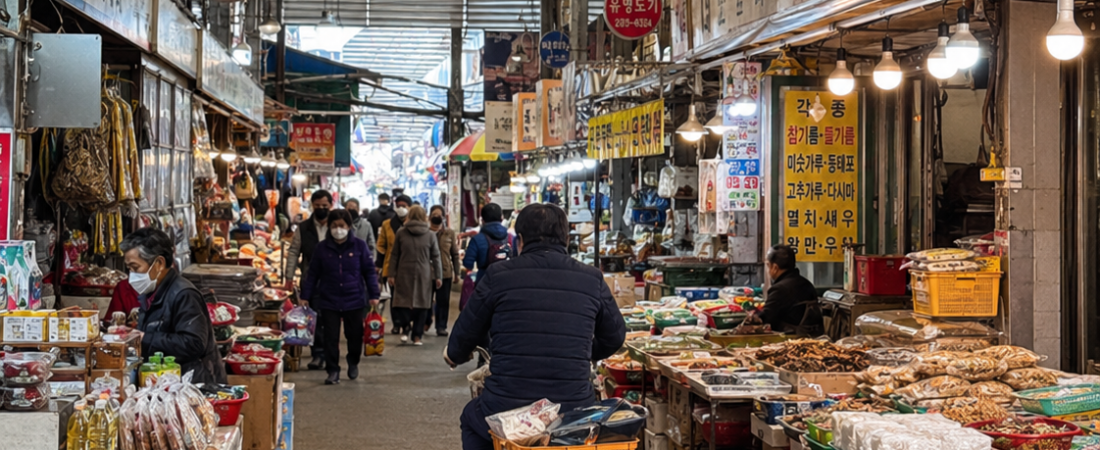
Traditional markets are one of the best ways to see Seoul beyond palaces, cafes, shopping malls, and Instagram spots.
But not every famous market gives the best experience.
Many first-time visitors hear about Gwangjang Market first. It appears in travel videos, food shows, and social media posts. It is famous, easy to reach, and full of well-known Korean street foods.
Personally, though, I would not make Gwangjang Market my top recommendation.
In recent years, it has become very tourist-heavy. Some visitors still enjoy it, but others feel the prices are high, the food quality is inconsistent, and the market can feel more like a tourist stop than a place where locals regularly go. Many Koreans do not visit Gwangjang Market often for everyday meals.
That does not mean you should avoid it completely. If you are curious, it can still be worth a short visit.
But if you want a more practical, local, and interesting market experience in Seoul, I would also consider places like Garak Market, Namdaemun Market, Kyungdong Market, Noryangjin Fish Market, and Mangwon Market.
Why Visit a Traditional Market in Seoul?
Traditional markets show a side of Seoul that is easy to miss.
You can see fresh fruit, seafood, dried herbs, Korean snacks, kitchen goods, old shop signs, small restaurants, and local people shopping for daily life.
Some markets are great for food. Some are better for shopping. Some are more about atmosphere and culture than eating.
The important thing is choosing the right market.
For first-time visitors, I would not recommend visiting a market just because it is famous. It is better to choose one that matches what you actually want to experience.
Garak Market: Best for Seeing Korea’s Real Food Market System
Garak Market is one of the most important food markets in Seoul.
It opened in 1985 as Korea’s first public wholesale agricultural products market. It is a huge market with separate sections for agricultural products, seafood, livestock, and other food-related goods.
This is not a cute tourist market. It is a working market.
That is exactly why it is interesting.
Garak Market gives you a look at how food moves through Seoul before it reaches restaurants, smaller markets, and homes. You can see large amounts of fruit, vegetables, seafood, meat, and seasonal ingredients.
For travelers who want something more local than a famous street food market, Garak Market can be a better choice.
What to See at Garak Market
Garak Market is good for:
Fresh fruit
Seasonal vegetables
Seafood
Meat and livestock sections
Large-scale food trading
Local restaurants and food stalls nearby
It is especially interesting if you enjoy food culture. Even if you do not buy much, walking through the market gives you a real sense of how important fresh ingredients are in Korean daily life.
Tips for Visiting Garak Market
Garak Market is large, so it can feel confusing at first.
For casual visitors, Garak Mall or the more organized retail sections are easier than the wholesale areas. The wholesale market can be busy with carts, workers, and trucks.
Visit in the late morning or early afternoon if you want a more comfortable experience. Very early morning can be active, but it may feel too intense for first-time visitors.
This is not the best place for souvenirs. It is better for travelers who want to see a real Korean food market.
Namdaemun Market: Best Overall Market for Shopping and Snacks
Namdaemun Market is one of the best traditional markets for first-time visitors because it is practical, central, and easy to combine with other sightseeing areas.
It opened in 1964 and is widely introduced as Korea’s largest traditional market. It has shops selling many kinds of goods, often at affordable prices, and many stores also work as wholesale shops.
Compared with Gwangjang Market, Namdaemun feels more useful for everyday shopping.
You can find clothes, bags, socks, kitchen goods, accessories, children’s items, snacks, souvenirs, and small household products. It is the kind of market where you can actually buy things you may use during your trip.
What to Buy at Namdaemun Market
Namdaemun Market is good for:
Korean snacks
Socks and small accessories
Bags
Kitchenware
Children’s clothes
Souvenirs
Ginseng products
Small gifts
Everyday travel items
There are also food alleys where you can try simple Korean meals. Namdaemun is known for dishes like kalguksu, dumplings, hotteok, and galchi jorim, a spicy braised hairtail fish dish.
Tips for Visiting Namdaemun Market
Namdaemun Market is close to Myeongdong, so it is easy to visit both on the same day.
Go during the day. Operating hours vary by store, and many shops close on Sundays, so weekday or Saturday daytime is usually better.
Do not try to see every alley. The market is big and can feel like a maze. Pick one area, walk slowly, and enjoy browsing.
For first-time visitors, Namdaemun is one of the safest recommendations because it offers a mix of shopping, food, and local atmosphere.
Kyungdong Market: Best for Korean Herbal Medicine and Hanyak Culture
Kyungdong Market is one of the most unique markets in Seoul.
This is the market I would recommend if you want to see something deeply Korean, not just another food street.
Kyungdong Market and the nearby Seoul Yangnyeong Market area are famous for hanyak, which means traditional Korean herbal medicine. You will find shops selling medicinal herbs, dried roots, ginseng, dried dates, mushrooms, herbal teas, and health-related ingredients.
Seoul Yangnyeong Market is especially known as a major Korean medicinal herb market, with many shops selling herbal medicine ingredients and preparations.
The atmosphere is very different from Myeongdong, Hongdae, or Gwangjang Market.
You may smell dried herbs before you even know what you are looking at. Shops display roots, bark, dried fruits, seeds, mushrooms, and ingredients that may be unfamiliar to foreign visitors.
It feels old, practical, and very local.
What to See and Buy at Kyungdong Market
Kyungdong Market is good for:
Korean medicinal herbs
Ginseng
Dried dates
Dried mushrooms
Herbal teas
Grains and nuts
Traditional health products
Dried roots and hanyak ingredients
For most travelers, I would recommend browsing rather than buying serious medicinal products unless you know what you are purchasing.
However, simple items like herbal tea, dried jujube tea ingredients, or packaged ginseng products may be easier to understand.
Tips for Visiting Kyungdong Market
Kyungdong Market is best for travelers interested in Korean culture, wellness, traditional medicine, or local markets.
It is served by Jegi-dong Station on Seoul Subway Line 1, which makes it fairly easy to reach.
Do not expect a trendy market. This is not a polished tourist attraction. That is part of its value.
If you want to connect the visit with culture, look into the Seoul K-Medi Center or nearby traditional medicine-related spots. This area is closely connected to Korean oriental medicine culture.
For first-time visitors, Kyungdong Market is one of the best choices if you want a market that feels different from the usual Seoul travel route.
Noryangjin Fish Market: Best for Seafood
Noryangjin Fish Market is the classic seafood market in Seoul.
This is where you go if you want to see tanks full of fish, crab, shellfish, octopus, shrimp, and other seafood. It is busy, direct, and very different from a street food market.
Many visitors choose seafood from vendors and then take it to an upstairs restaurant to have it prepared. The seafood price and restaurant preparation fee are usually separate, so it is important to ask before you agree.
What to Eat at Noryangjin Fish Market
Popular choices include:
Raw fish
Steamed crab
Grilled shellfish
Shrimp
Spicy fish stew
Octopus
Seafood platters
This market is best for seafood lovers. If you do not enjoy seafood, you can probably skip it.
Tips for Visiting Noryangjin Fish Market
Ask about the total price before ordering.
If buying seafood directly feels stressful, choose a restaurant with a clear menu instead.
Noryangjin can be a strong alternative to Gwangjang if you want a more memorable food experience and are comfortable with seafood.
Mangwon Market: Best for a Smaller Neighborhood Market
Mangwon Market is a good choice if you want something less intense.
It is smaller than Namdaemun or Garak Market and easier to explore in a short time. It is located near Mangwon Station and works well with Hongdae, Hapjeong, Yeonnam-dong, or Mangwon Hangang Park.
Mangwon Market has a friendly neighborhood feel. You can find snacks, side dishes, fruit, fried chicken bites, tteokbokki, gimbap, croquettes, and small local shops.
What to Eat at Mangwon Market
Good choices include:
Dakgangjeong
Tteokbokki
Gimbap
Hotteok
Croquettes
Fresh fruit juice
Korean side dishes
Mangwon Market is good for light snacking rather than a full market day.
Tips for Visiting Mangwon Market
Visit in the afternoon, then walk to Mangwon Hangang Park if the weather is nice.
This market is easier for first-time visitors because it is not too large. It also feels more relaxed than the very famous tourist markets.
Gwangjang Market: Famous, But Not My First Pick
Gwangjang Market is famous for a reason.
It is old, central, and full of recognizable Korean foods such as bindaetteok, mayak gimbap, tteokbokki, kalguksu, and yukhoe.
But I would describe it honestly.
Gwangjang Market has become very popular with tourists. Because of that, the experience can feel crowded and commercial. Some people enjoy the energy, but others feel the prices are not always great for the quality.
Personally, I would not recommend Gwangjang Market as the best traditional market in Seoul.
If you are curious, go for a short visit. Try one or two foods. Then compare it with a market like Namdaemun, Mangwon, Kyungdong, or Garak.
You may find that the less famous markets give you a better sense of everyday Seoul.
Which Seoul Market Should You Choose?
Choose Namdaemun Market if you want shopping, snacks, and a central location.
Choose Kyungdong Market if you want Korean herbal medicine, hanyak ingredients, ginseng, and a more traditional atmosphere.
Choose Garak Market if you want to see a real large-scale food market with produce, seafood, and livestock sections.
Choose Noryangjin Fish Market if you love seafood.
Choose Mangwon Market if you want a smaller neighborhood market.
Choose Gwangjang Market only if you are curious about the famous tourist market and do not mind crowds.
For most first-time visitors, my top three would be Namdaemun Market, Kyungdong Market, and Mangwon Market.
For food culture lovers, I would add Garak Market.
For seafood lovers, add Noryangjin Fish Market.
Final Thoughts
Gwangjang Market gets a lot of attention, but Seoul has many traditional markets that may give you a better experience.
Namdaemun is practical and easy. Kyungdong is unique and deeply connected to Korean herbal medicine culture. Garak shows the real food supply side of the city. Noryangjin is best for seafood. Mangwon is smaller, relaxed, and local.
A good market visit does not have to be trendy or famous.
Sometimes the best market is the one where people are simply shopping, eating, working, and living their normal day.